When the Bumblebees sleep
If you want to photograph bumblebees, you not only have to be patient, but above all, you have to be very quick. Or you can get up early enough on a cold morning…
Early in the Morning
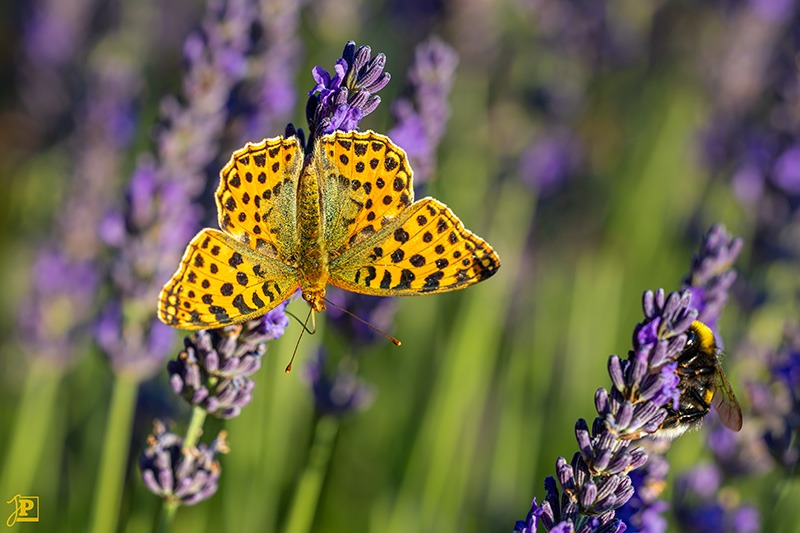
I’ve tried photographing insects many times before. These tiny creatures never cease to amaze me. But it’s not as easy as it sounds, because they’re not just small—they’re also incredibly quick. See also my stories about “Flowers and Bees” or “Flighty Fellows”. It’s no different with bumblebees—and anyone who’s ever tried to photograph them and wished they’d just sit still for a second knows why the German version of the saying “to have ants in one’s pants” is “Hummeln im Hintern haben”—”to have bumblebees up one’s butt”.
With a little luck, nature can come to the rescue here. When the weather conditions are right, clear nights can get quite chilly even in the middle of summer. On top of that, in our little valley at an altitude of about 1,300 ft., cold air tends to pool like water in a bathtub. And so, at the end of July, the temperature suddenly dropped to just 42°F in the morning.
At these temperatures, bumblebees fall into a state of cold torpor and sit completely still on flowers or leaves—giving you all the time in the world to photograph them from every angle. Well, almost all the time—because as soon as the strong summer sun raises the temperature by just a few degrees, these little buzzers quickly become active again.
The Bumblebee as a Puzzle
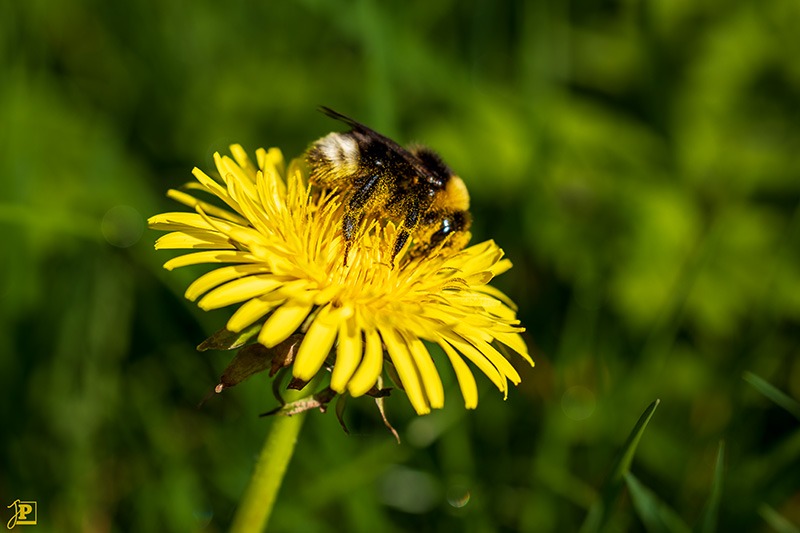
The second major challenge in macro photography, aside from getting the subject to stay still, is depth of field. When you get as close as possible to your subject using a 100 mm macro lens, the area of the image that remains in focus is only about a millimeter deep. A bumblebee, however, is significantly larger—the laws of optics make it impossible to capture the entire insect in sharp focus in a single shot.
This is where you have to pull a trick out of your bag—the key term here is “focus stacking.” This involves taking several photos, slightly shifting the point of focus between each shot. The result is a series of images, each of which has a different “slice” of the bumblebee in focus. Fortunately, modern cameras—such as my Canon R6—support this directly with a dedicated automatic mode.
The rest is done on the computer: After processing the individual images, they are stitched together in Photoshop. This process combines the sharp areas from each individual shot into a single, consistently sharp image.
However, this doesn’t always work. Artifacts often occur, for example when an object closer to the viewer appears so blurry and large in the shots with the focus further back that it obscures other parts of the image. Even the slightest movements, such as an antennae that’s been raised, can render the final result unusable. So a little bit of luck is still required…
The Results
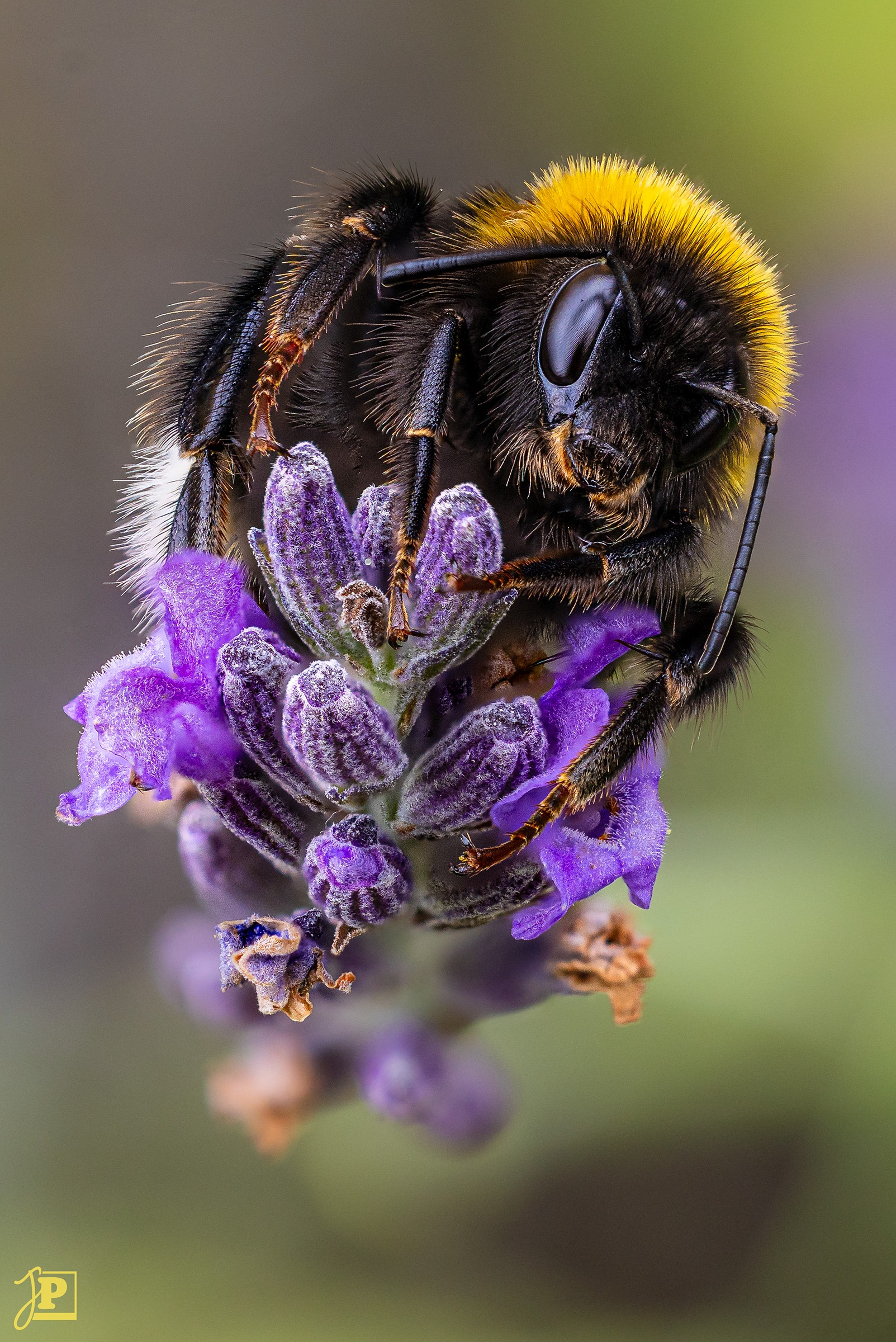
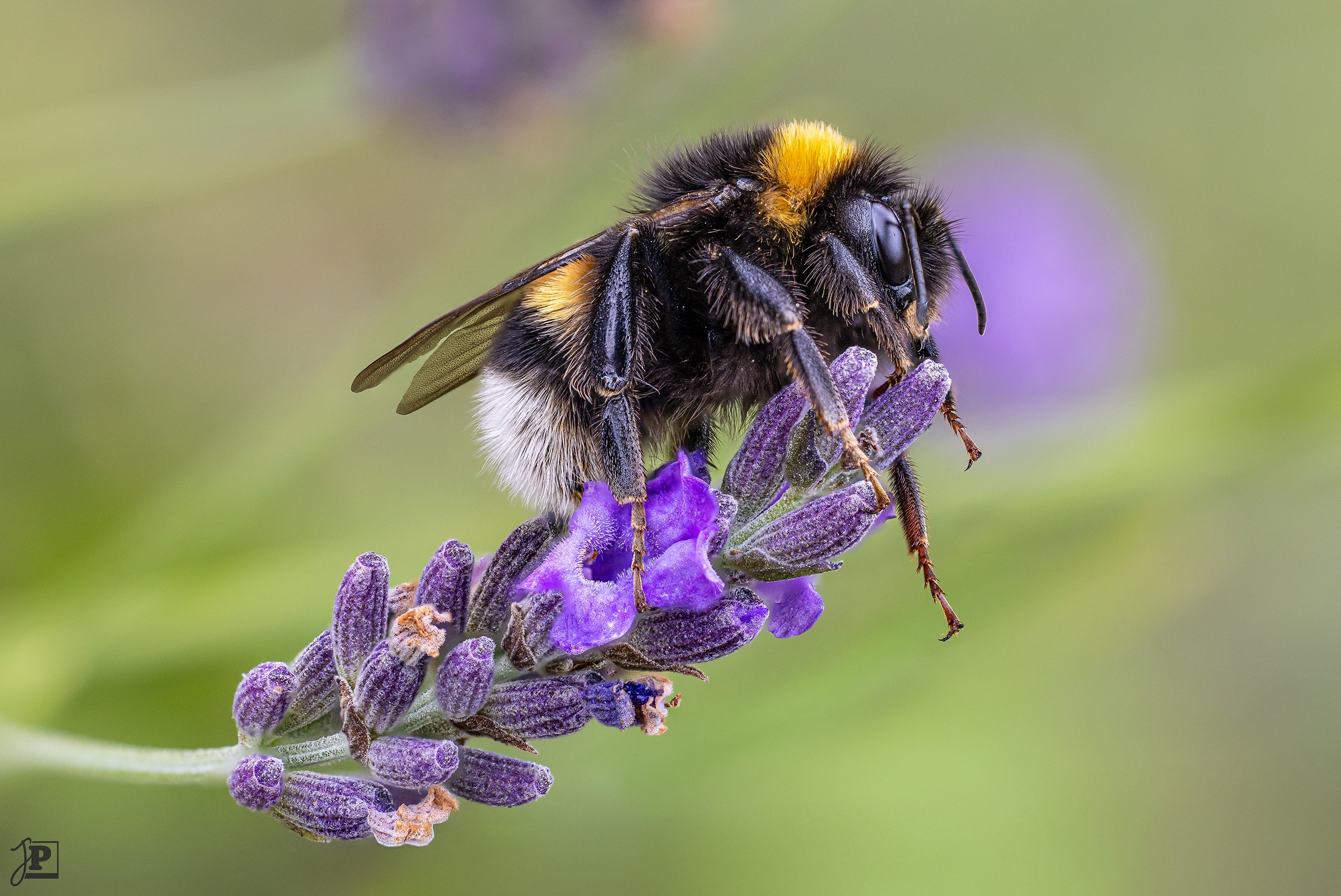
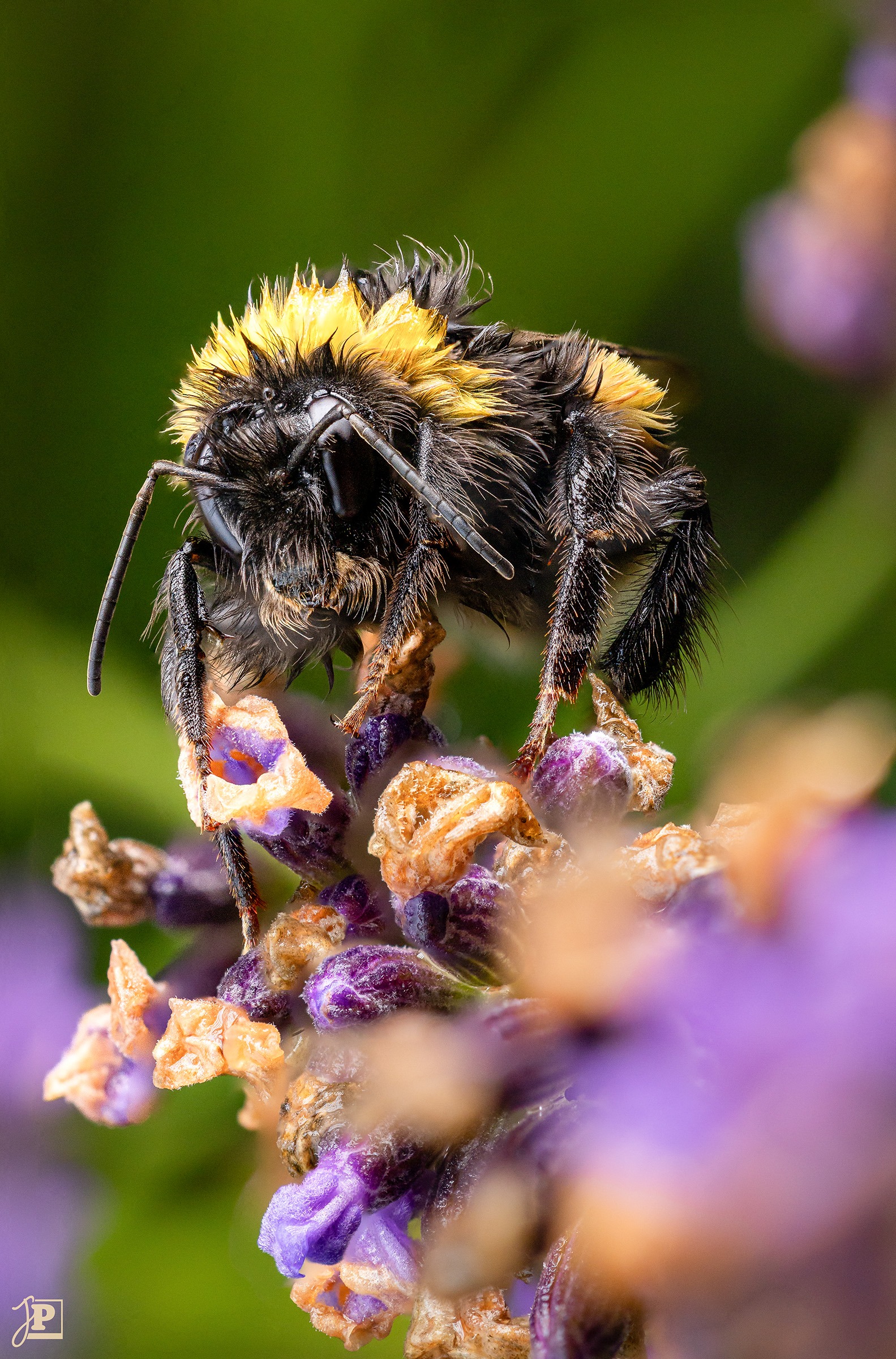
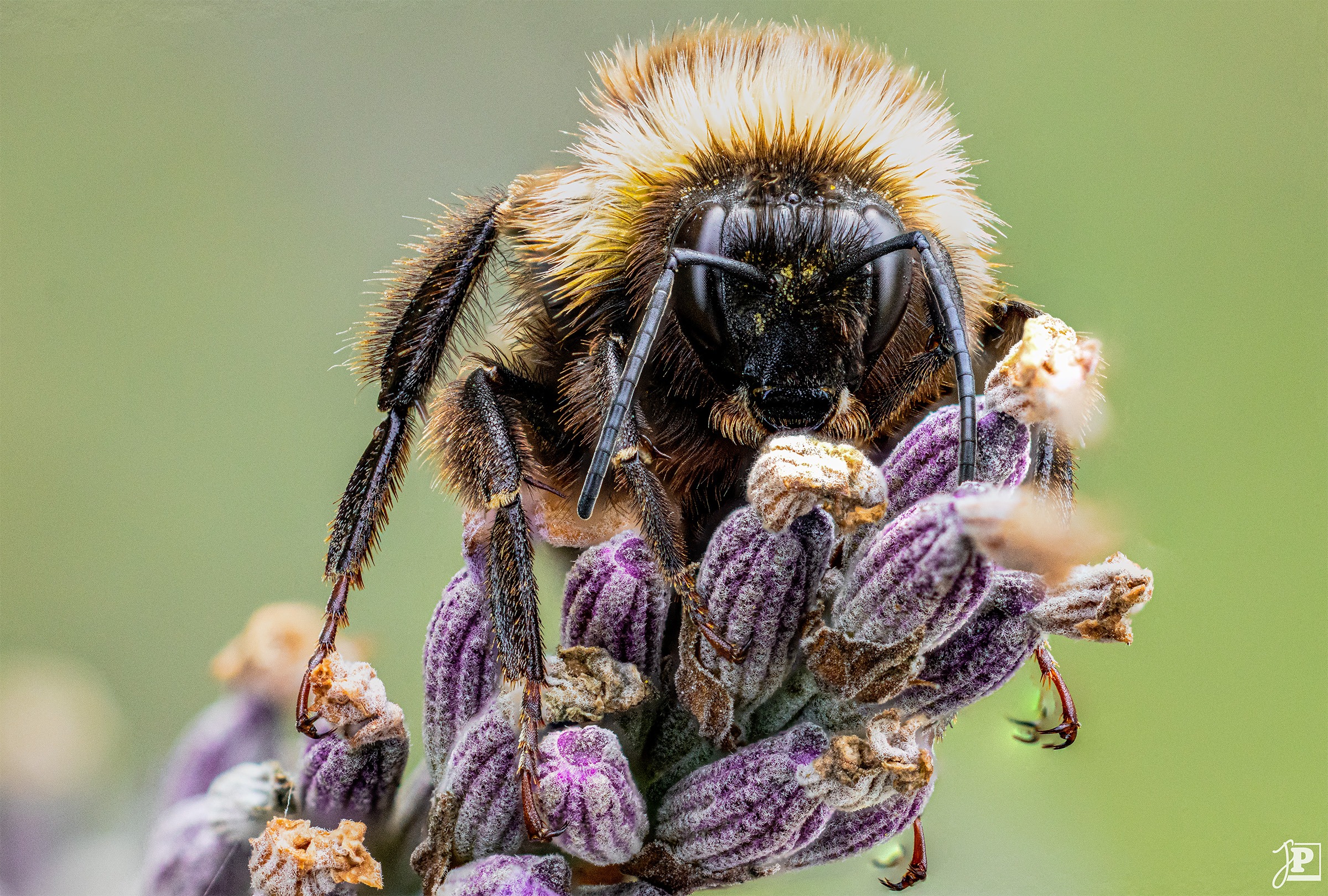
The following images were taken over three consecutive mornings. All of the photos shown were created by combining 10 to 25 individual shots in Photoshop and then edited. The only reason the first image didn’t make it into the calendar is that it’s in portrait orientation.