Sleepless in Seattle
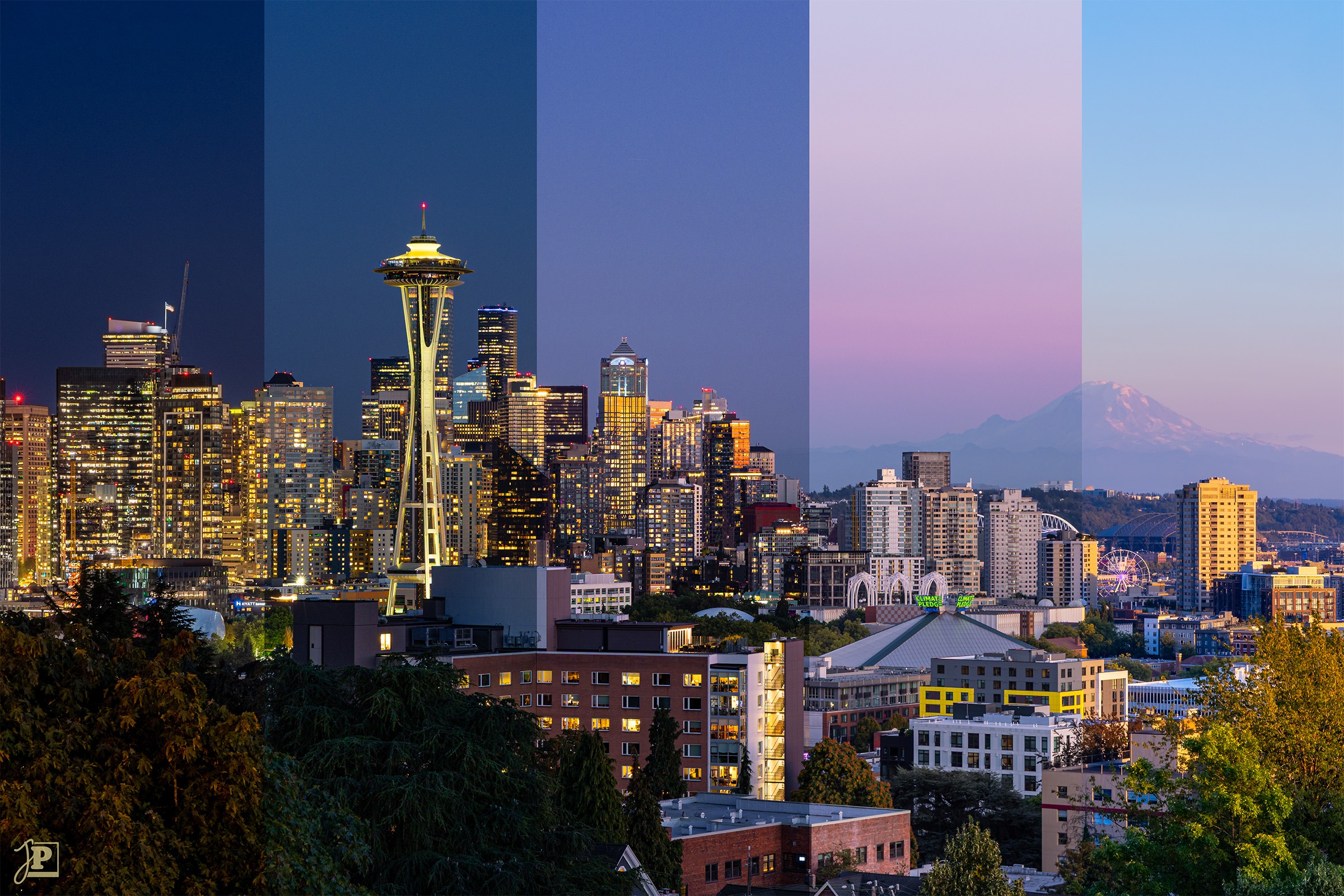
What do you do when you’re photographing a sunset and can’t decide which photo is the best? You capture the whole evening in a single shot.
Sleepless in Seattle
Business trips to the U.S. aren’t unusual for me; however, it’s definitely something special when the destination isn’t in the southeastern U.S. This time, I was heading to the literal opposite end of the country, to Seattle. The itinerary gave me a free day between the flight and the start of my meetings, which I definitely wanted to use to explore the city—especially to cope with the nine-hour jet lag.
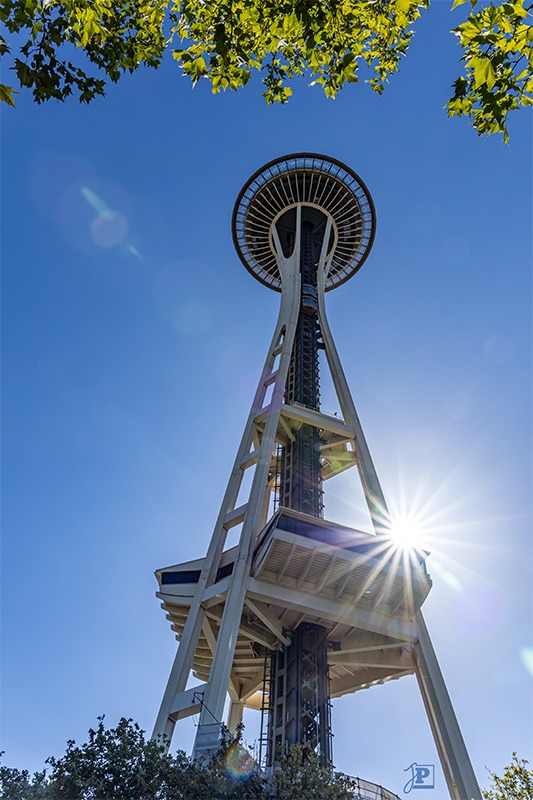
Once it was clear that I’d be lucky with the weather, I definitely wanted to photograph the sunset. The only question was: where? My first idea was, of course, the Space Needle. But I expected it to be pretty crowded there, and the glass panes in front of the observation deck posed the risk of unwanted reflections. A colleague based in Seattle, who is also very active on Instagram herself, recommended Kerry Park to me. It offers a unique perspective in that, at sunset, you’re not looking directly at the sun, but have it positioned diagonally behind you. Instead, you get a view of the golden skyline with the famous Space Needle, and Mt. Rainier in the background.
Fortunately, Seattle is one of the cities in the U.S. that has an efficient and user-friendly public transit system. Thanks to the light rail and bus, I arrived at my destination on time. When I reached the upper end of the park after walking a few blocks—about an hour before sunset—a large group of photographers had already gathered there. Now I just had to find a good spot.
Due to space and weight constraints, I didn’t have a full-size tripod with me, just a 10″ mini tripod that I usually use for macro shots close to the ground. However, there’s a large electrical box in a prime spot at the upper corner of the park. It was already occupied by a couple of photographers, but they were both Canon users as well. So we quickly struck up a conversation, and I was able to secure a spot underneath their large tripods so that we wouldn’t get in each other’s way.
From Post-Processing to Challenge
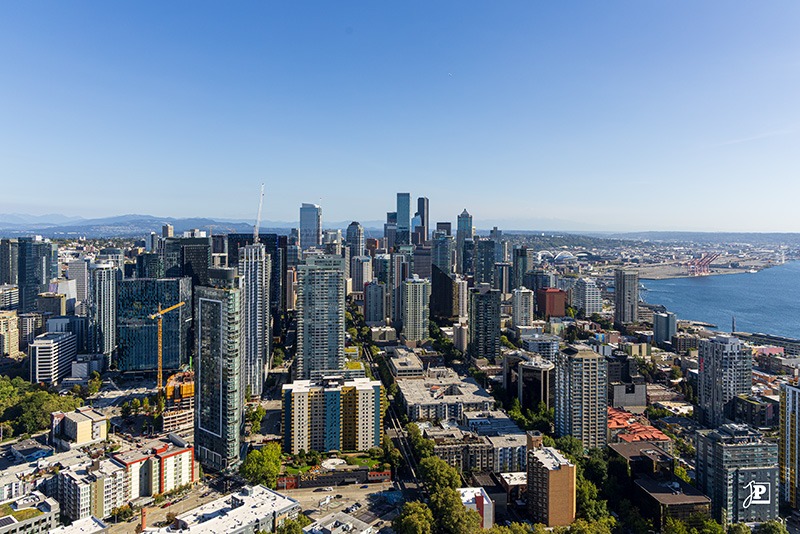
It didn’t take me long to find the right frame and adjust the settings, and then it was time to relax. There must have been 30 to 40 people there in total, and there was a constant stream of people coming and going. In the end, there was a group of five photographers gathered around the electrical box—none of whom, except for the couple of course, had met before. We were all Canon users from the U.S., Germany, and Canada, and we spent two and a half hours chatting, talking shop, exchanging tips—and occasionally even swapping lenses—while taking photos every now and then. During that time, I took exposure bracketing shots at regular intervals.
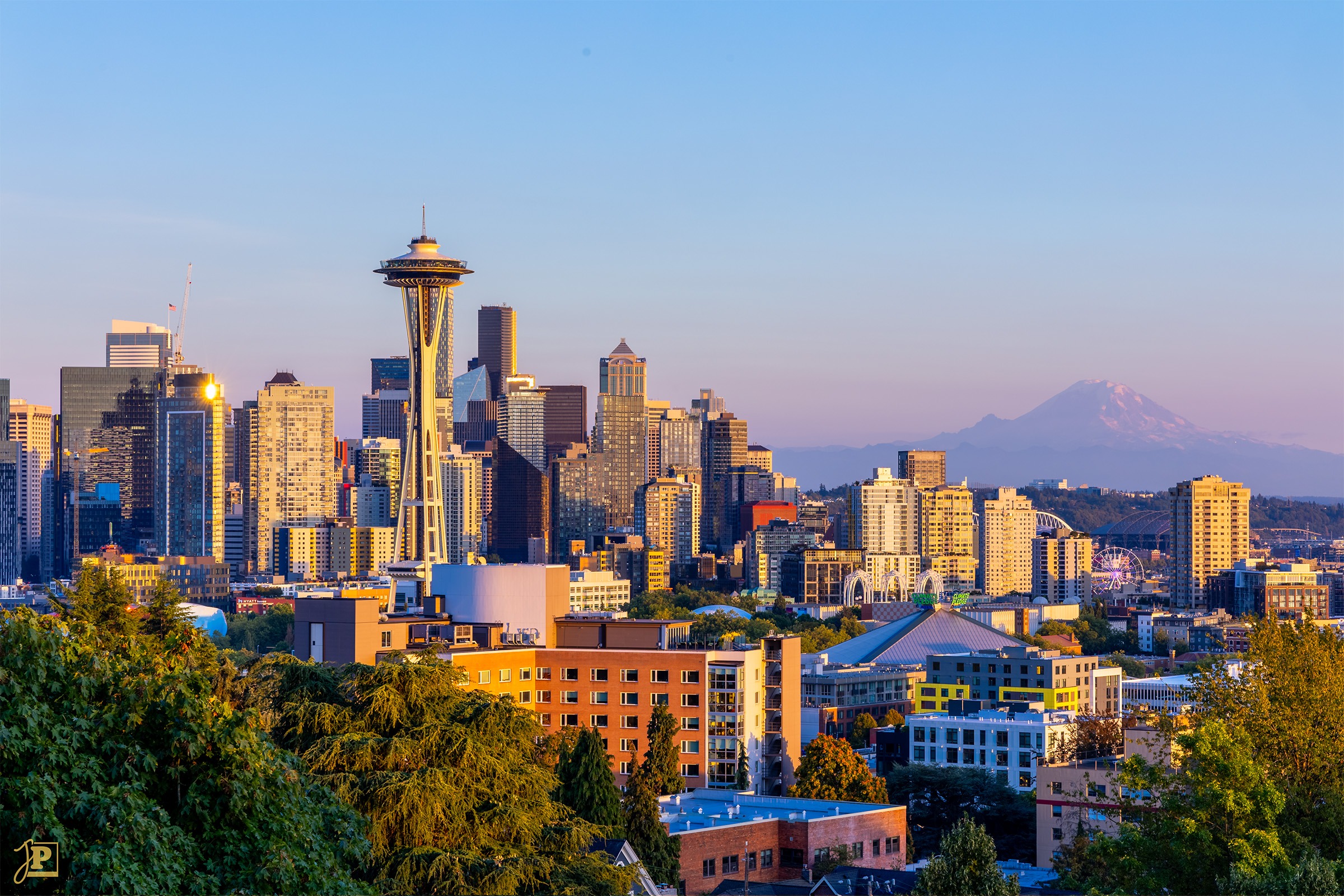
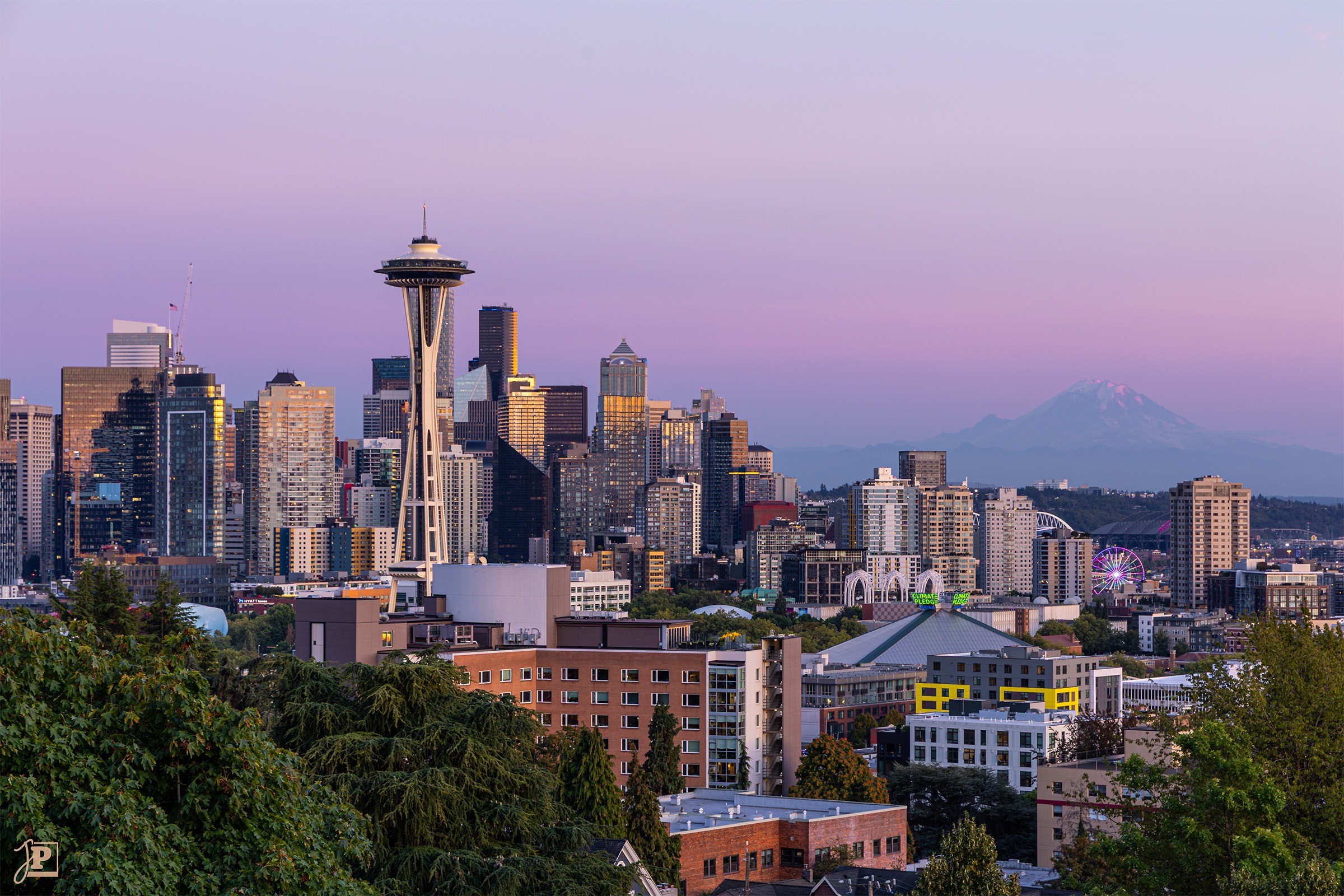
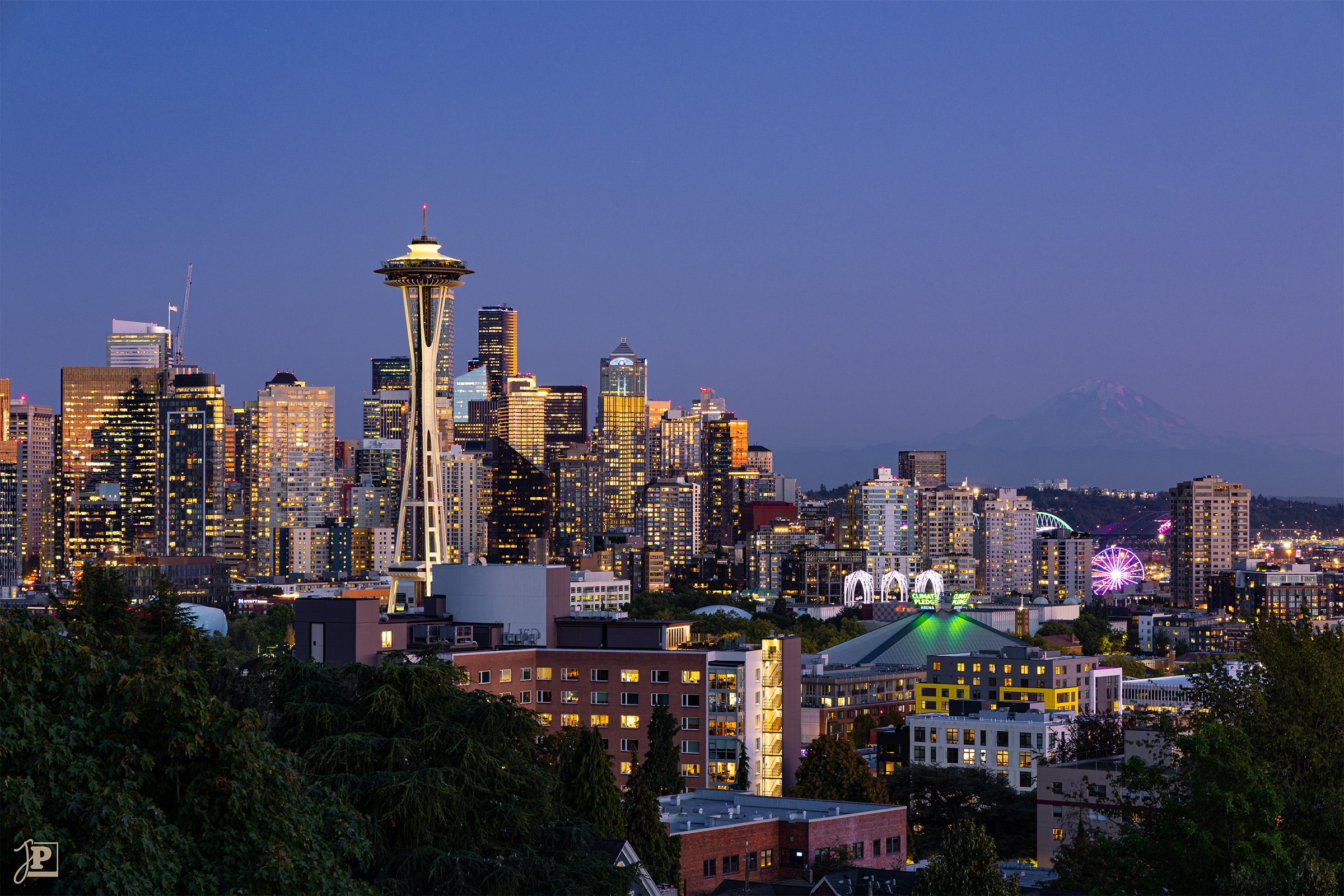
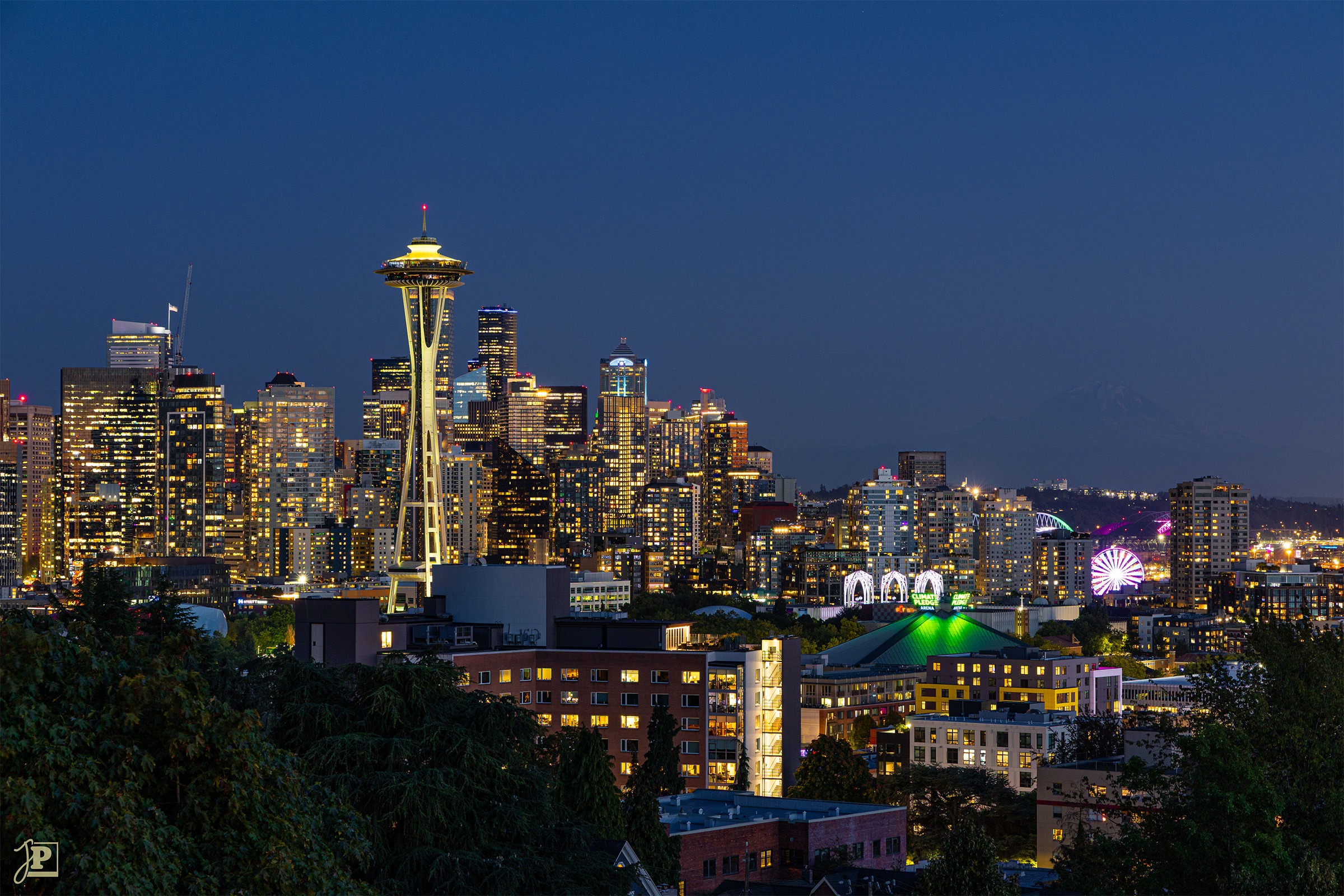
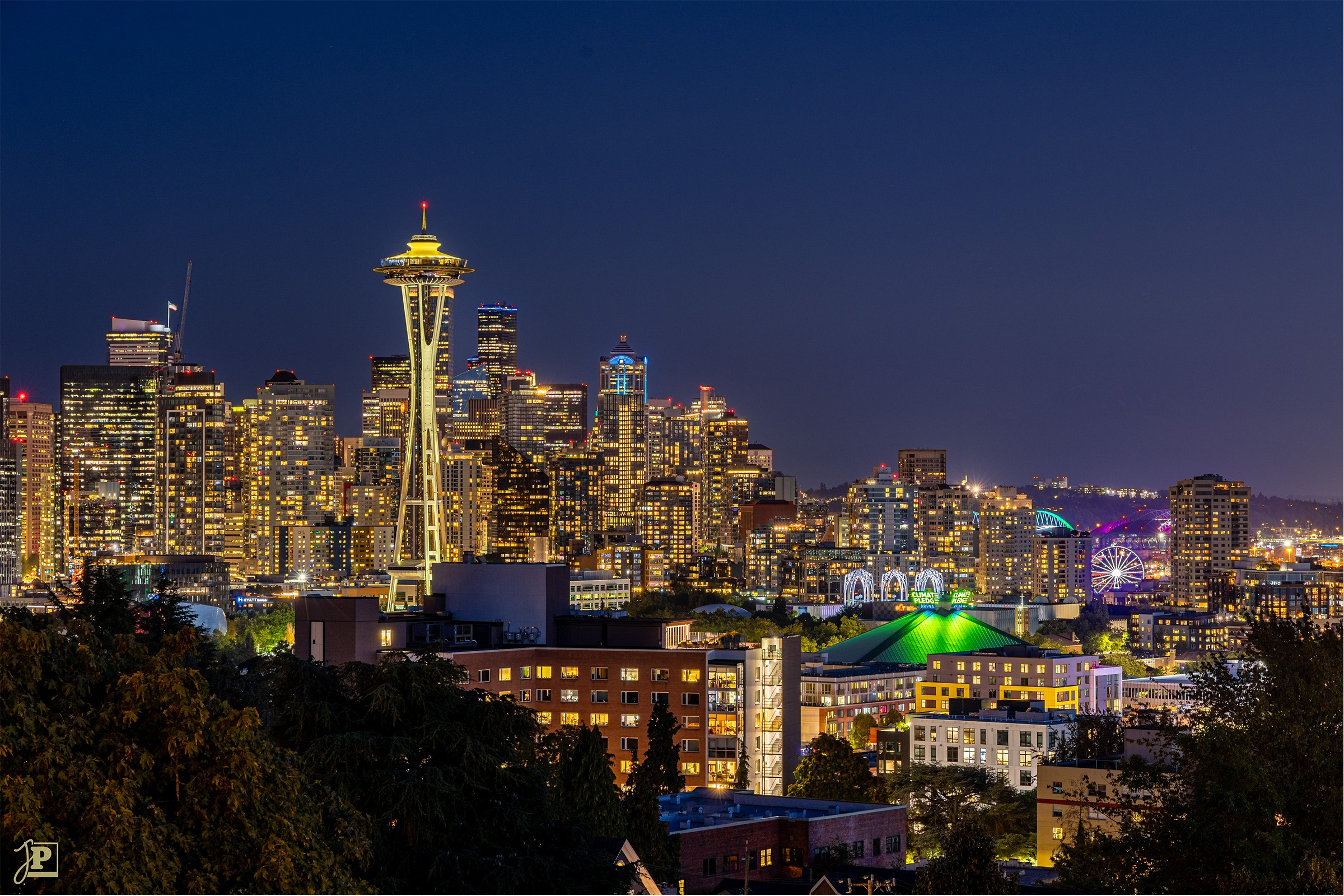
Back home, I combined these into HDR images in Lightroom Classic—using 2, 3, or 4 individual shots, depending on what worked best—and ultimately kept my “Top 5.” But I could never quite decide which one was my favorite. Was it the light during the blue hour? Or the unobstructed view of Mt. Rainier during the golden hour? That’s how the idea came about to combine the five images into one.
I imported the individual images as layers into Photoshop, then used guides to divide them into five columns using masks. In my initial attempt, I arranged them in chronological order, with the images becoming later in time from left to right, but this caused the most interesting elements—Mt. Rainier and the city lights—to disappear. So I reversed the order—and I was completely satisfied with the result.
And it’s not just me: I’ve been part of Stephan Wiesner’s “Zielfoto” community for many years now. That’s where I submitted the photo along with the accompanying story, as described here. Not only did it win “Story of the Week” there—which I’m extremely proud of—but it also inspired a community challenge that resulted in even more absolutely fantastic photos. Have a look below; the page is in German, but the amazing photos speak for themselves:
The Result
Here is the final result, followed by the five individual images in chronological order with timestamps: