A Bird in Flight
Photographing birds in flight isn’t an easy task—especially those small, agile songbirds. But with patience and a little technical help, it can be done.
South Carolina… again, at last
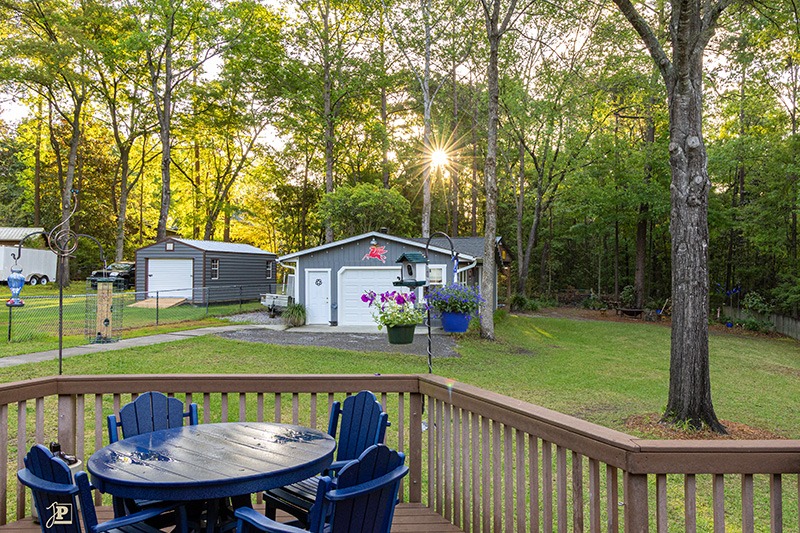
Finally, we managed to organize a meeting near Charleston again. After my projects had been held in the western United States for the past three years—in Phoenix and Seattle—we were finally back in my “second home.” A time difference of just five hours (thanks to daylight saving time) instead of the previous nine was just one of the many advantages of this decision. Even more importantly, this gave me the chance to extend my stay there for a weekend with my best friend Phil.
A few days in Summerville always feel like a mini-vacation to me. I love sitting on the deck behind the house, especially in the morning, as the sun slowly rises above the trees, watching the colorful comings and goings of birds, squirrels, and lizards. That’s exactly why I’d packed my R7 with the 100-400mm telephoto lens: I wanted to photograph birds, because the conditions there are much better than back home at my place, where I have direct backlighting at midday and the farm across the way doesn’t make for a nice background. At Phil’s, the sun shines from the right (proverbially and literally) side during the day and you look out onto a dense forest.
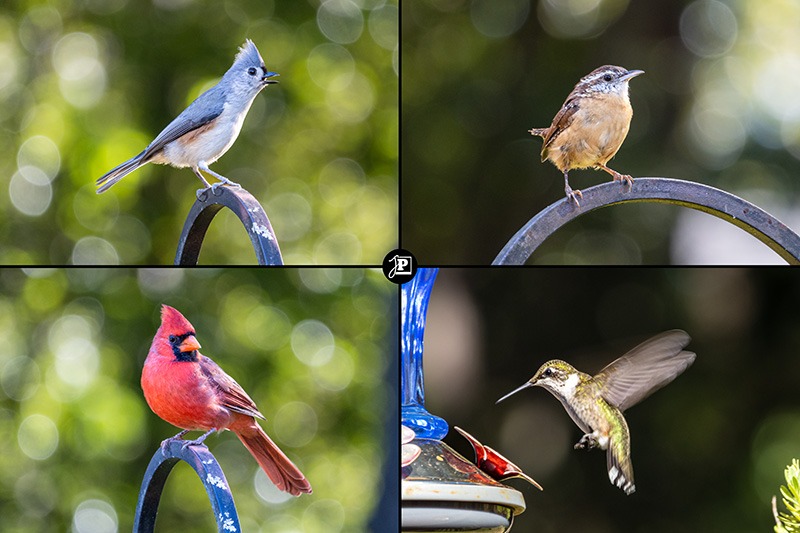
I was actually lucky with the weather. Even though it was quite chilly in the morning at just 42°F, it was mostly sunny and pleasantly warm in the afternoon. During the two and a half days I was there, I had so many opportunities to settle into one of the deck chairs with my camera, a book, and something to drink. There is a colorful array of birds to observe: from rather unassuming birds like the tufted titmouse to species like the Carolina wren, which may look unassuming but have a voice you can’t miss—earning it the nickname “alarm clock bird.”
Among the more colorful birds are the cardinals, with their bright red males, and the eastern bluebirds, with their blue heads and wings. The latter have even earned the nickname “asshole bird” because they tend to bully smaller birds, especially Carolina chickadees. It was still too early for the ruby-throated hummingbirds; these don’t show up until later in the year when it’s consistently warm enough.
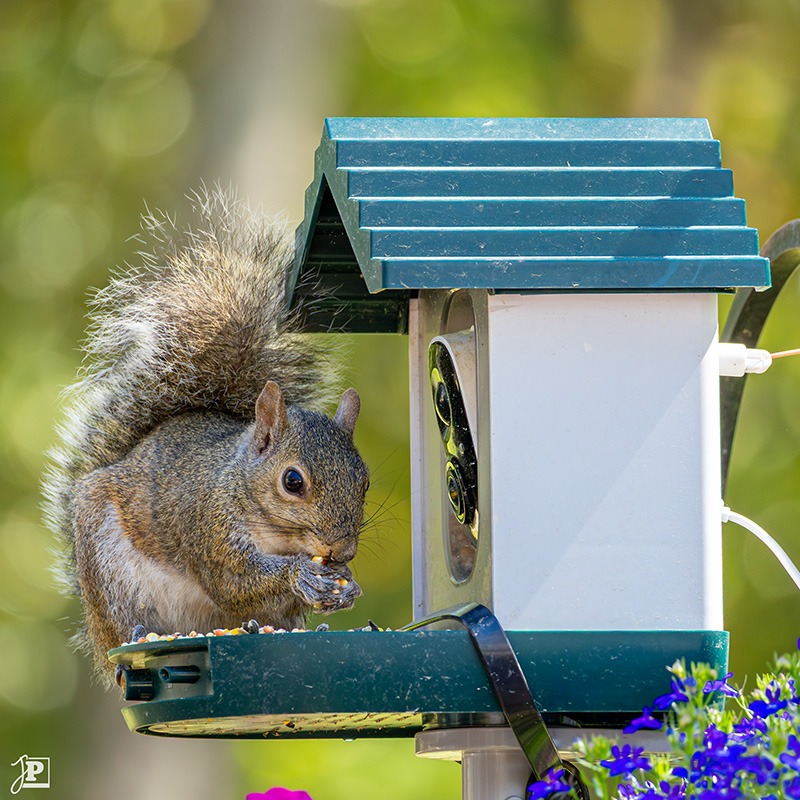
There’s plenty of activity in the garden in general, too. In addition to the many birds, all sorts of squirrels are up to no good there. They’re relatively shy when you approach them, but as soon as they feel unobserved, they’re happy to raid the bird feeders. And there’s no such thing as a “squirrel-proof” feeder—the only solution is to find a food that birds like but squirrels don’t: safflower seeds. Before that, squirrel butts were the most common sight the camera in Phil’s birdhouse captured.
And finally, there are lizards, about the size of a hand, and in various colors—gray, green, brown. They dart across the patio every now and then, bask in the sun for a moment, and then scurry off. If you approach them, they quickly hide under something—so before sitting down in a rocking chair, it’s always a good idea to take a look under the runners first.
In short: there’s plenty to see, so you’ll rarely get bored on the terrace, even without a book. But even in March, you shouldn’t underestimate the sun’s strength. Distracted by the bustling activity, I ended up getting my first sunburn of the year. Still, spring is the most beautiful season there, when nature has already fully awakened from its winter slumber but the days aren’t too hot yet.
A Bird in Flight
With so many bird species at the various feeding stations, the chances of capturing a bird at just the right moment are, of course, relatively high. Still, timing is everything. That’s where technology comes in handy: my Canon R7 has a feature called “RAW Burst Mode,” which takes photos in rapid succession (30 frames per second). As an additional option, this mode offers “pre-shooting”: As long as you keep the shutter button half-pressed, the camera continuously captures images in a buffer in an endless loop, which are overwritten after half a second. If you then press the shutter button all the way down, the last 15 photos from the buffer, as well as an additional 30 images per second as long as you hold the button down, are written to the memory card.
Normally, when you watch a bird through the camera’s viewfinder and press the shutter button the moment it takes flight, you’re already too late, and at best you’ll just catch the bird just at the edge of the frame. With pre-shooting, you can now “travel back in time” by half a second in your shots, ensuring you almost certainly capture the moment it takes off.
Of course, all that’s left to do is hope that the bird flies off in the right direction so that you get a nice angle. A beautiful back can certainly be delightful, but with animal photos, you really do want to see the face as well. also, when birds take off from an elevated perch, they often don’t spread their wings until well after takeoff—in the photos, this makes it look as if the bird is simply sitting in mid-air. Quite surreal.
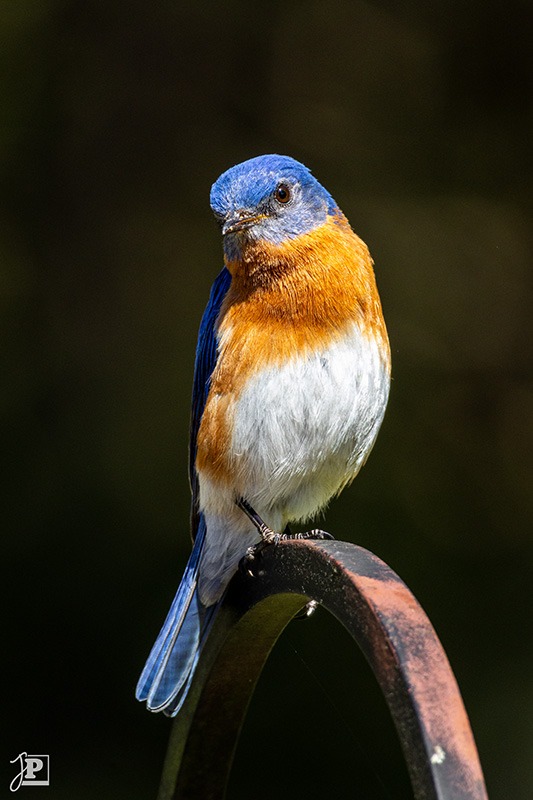
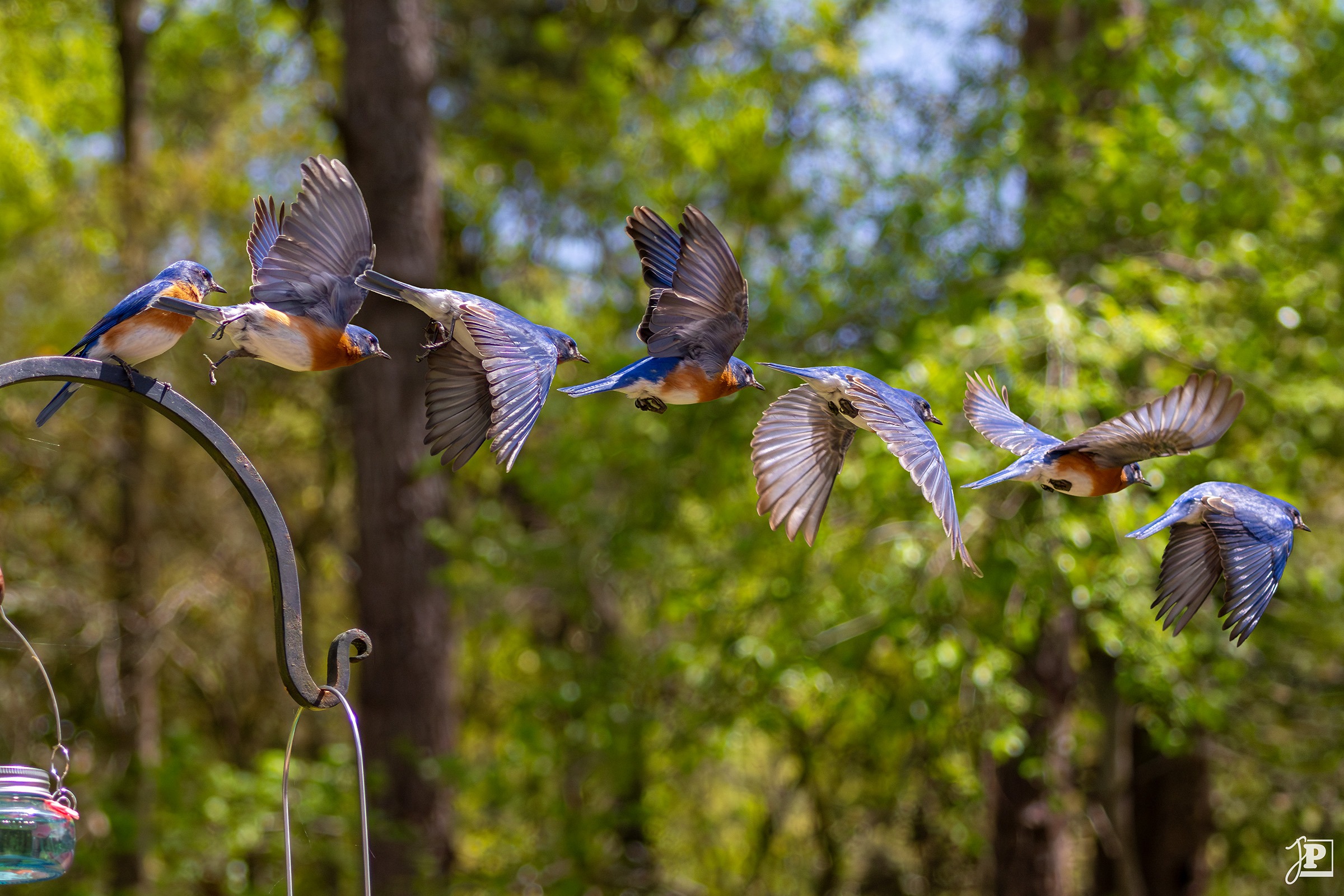
I finally caught the perfect moment with an eastern bluebird perched on a flower stand, which actually flew off in the direction I’d been hoping for. Out of the 47 images captured during this burst mode sequence, I ended up keeping 18—the 15 taken before I pressed the shutter button and three taken afterward. This clearly demonstrates the advantage of this feature.

To capture the bird’s entire flight in a single photo, I selected the seven shots with the most beautiful wing positions after editing the individual images and layered them on top of each other in Photoshop. Using the first photo which shows the bird still perched as a reference, I then carefully cut out the bird from all the other images and inserted it into the composition. In doing so, I slightly adjusted the positions of the birds further to the right in the image to reduce overlap.
The Result
The result is a beautiful illustration of a bird in flight:
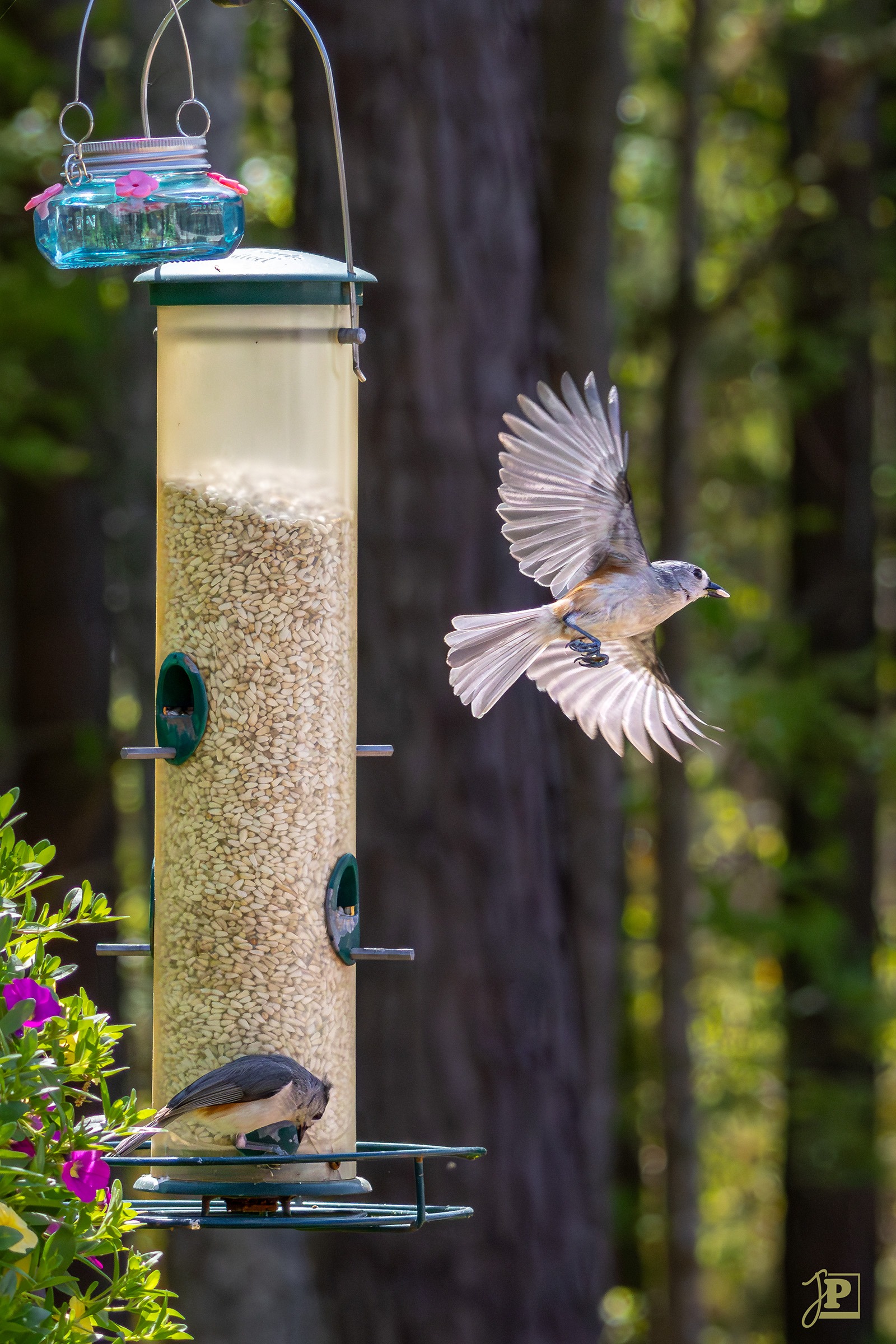
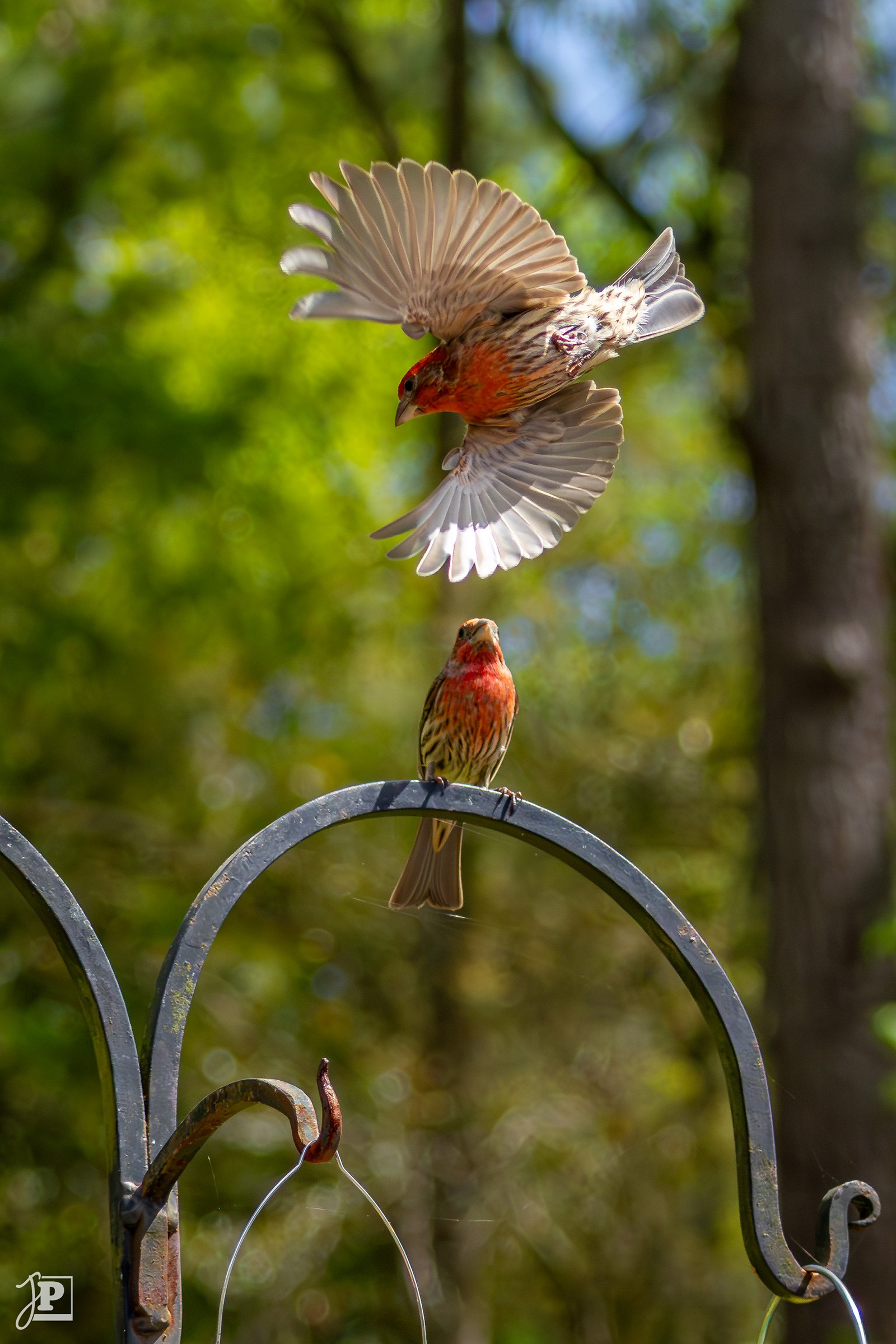
In addition, I managed to take a few more individual shots that I’m also very happy with:

You May Also Like
What happens in Las Vegas…
A visit to Cypress Gardens