Sunset Timelapse
Summer vacation on the Baltic Sea—if it’s too cold to swim, you can at least enjoy the vast sky and the colorful sunsets.
Old Station Bresewitz
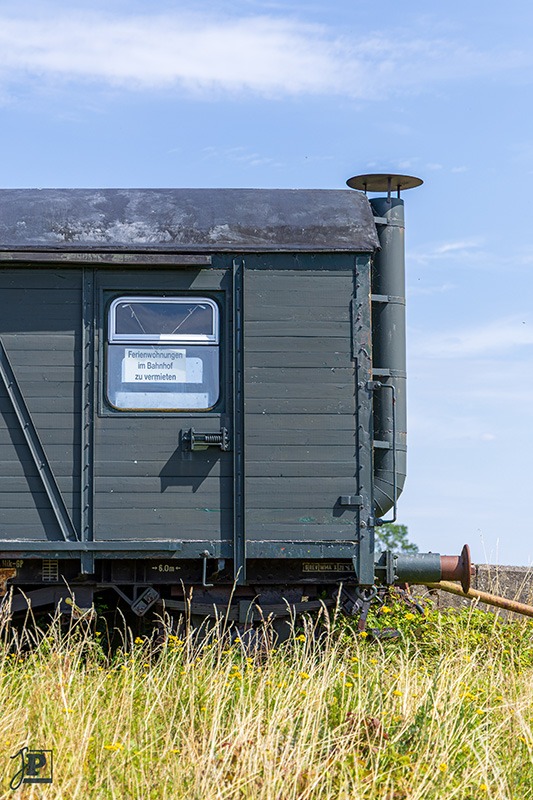
When we started planning this year’s vacation, one thing was clear: we wanted to go back to the seaside. Since we’d spent the last few years on Ameland on the North Sea, we decided to head back to the Baltic Sea this time. After some searching, we stumbled upon a real gem: the old Bresewitz train station, which houses several vacation apartments. As a railroad enthusiast, the atmosphere was, of course, more than enticing to me, but the ladies of the house were also thoroughly charmed by this idyllic setting just outside town.
The station itself has quite an interesting history. It’s located on the Darß Railway, which opened in 1910 and branches off from the main Rostock–Stralsund line in Velgast, running via Barth and Bresewitz to the Darß peninsula and the spa towns of Zingst and Prerow. While the line from Velgast to Barth is still used for passenger service today, the Barth-Prerow section had to be dismantled in the years following World War II as part of reparations. The railroad swing bridge over the Meiningenstrom was converted into a road bridge.
In 1967, engineers from the National People’s Army (NVA) of the GDR rebuilt the section from Barth to just past Bresewitz for military transports; there, the tracks now end at a dead-end ramp just before the bridge. Since the German reunification and the subsequent dissolution of the NVA, this part of the line is no longer in use. In 1996 and 1997, as a final journey, several old freight cars were moved to the Bresewitz station, where they now serve as a shelter for bicycles, spaces for art exhibitions, and one even as a small living quarters.
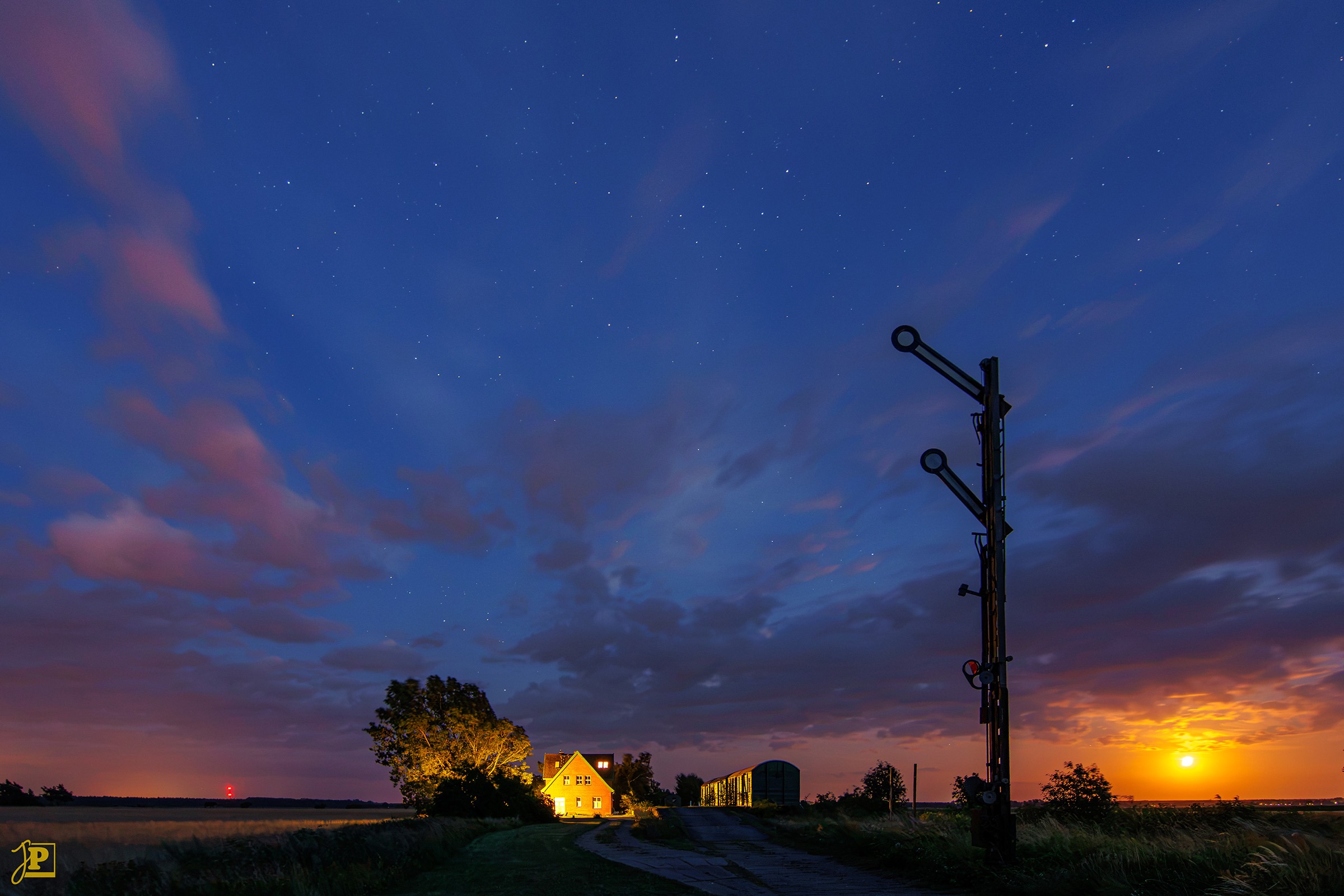
The ensemble is rounded out by the old departure signal ‘E’ toward Zingst, which somehow managed to survive being dismantled after the war and during the NVA era. The semaphore signal, with its two linked arms that can indicate either Hp 0 (Stop; the upper arm horizontal, the lower arm vertical) or Hp 2 (Slow Speed; both arms pointing diagonally upward to the right), has been signaling time to slow down for about 80 years now. The covers with the colored lenses for the nighttime signals (one red light, or a green light with a yellow light below respectively) were lowered at the end of the last shift so that the gas cylinders for the lamps could be removed, and they have been at half-mast ever since. Only a small piece of the red lens remains.
When the section of track from Barth to Bresewitz—and, following the reconstruction of a new railroad bridge, on to Prerow—is reactivated starting in 2027, there will also be some changes coming to Bresewitz. It is unclear whether the old cars can remain in place, but the old semaphore signal will certainly have to be removed, or at least marked as invalid.
Sunset Timelapse
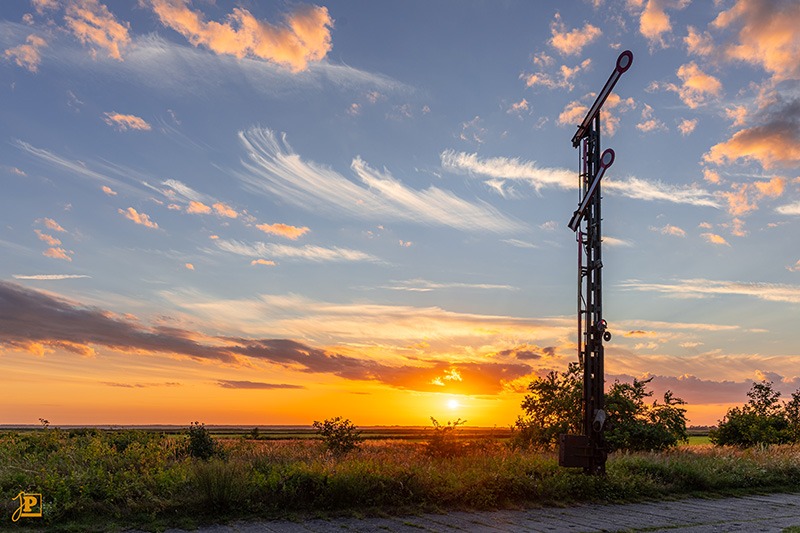
We had booked an eight-day stay in the “West” apartment, which is located in the former baggage handling area. In fact, during our stay, it was quite a bit cooler and, above all, much windier than expected, so in the end we were only able to enjoy one real day at the beach with a swim in the Baltic Sea. Other than that, the weather itself was actually quite nice—it was mostly sunny with lots of fluffy clouds. You can see a lot of the sky there—the flat landscape offers an endlessly wide horizon, and the train station also provides the perfect view to the west. Even the very first evening was a treat, with a colorful sunset, promising more.
And so I immediately found my “side project” for the vacation: using the camera gear I’d brought along to capture a sunset or two as timelapse footage. The fact that our stay also coincided with the full moon promised some amazing lighting conditions. The station’s location is a real advantage for this project: Since only a few guests from the other vacation rentals pass by here, it was no problem to leave the tripod with the camera set up on the lawn next to the driveway all evening.
For these shots, I was able to draw on my experience from past sunsets when it came to setting up the camera and adjusting the settings. I also weighted down the sturdy tripod with a bag containing a few bottles of water, but even so, it was so windy—at least on the first evening—that some camera shake is visible in the final images. Over the course of four evenings, I set up my camera from various angles; on two of those evenings, I also used a motorized tripod head that slowly pans the camera during the shot to add a bit of movement to the frame.
I started shooting between 7:30 and 8:00 p.m. each time, for three to four hours. The camera was set to take one photo every 15 seconds, so that just under four hours of footage ended up being about 35 seconds long in the final video (at 25 frames per second). The battery and memory card were more than sufficient for this; the main limiting factor here was simply that I had to go to bed at some point.
Even just looking at the individual photos after the first evening was more than promising—from broad daylight to clouds glowing in the sunset to an absolutely breathtaking moonset that was bright enough to create its own evening glow, it had it all.

Over the next few days, I had to contend with the usual vagaries of the weather: sometimes there weren’t enough clouds, sometimes there were too many. And sometimes the wind was so strong that a time-lapse shot was simply out of the question. But on the last evening, nature pulled out all the stops once again with a breathtaking full moonrise.
The Results
Once I got back home, I got right to work on post-processing. With the combination of Adobe Lightroom Classic and LRTimelapse, however, this is a very convenient and efficient process. All you have to do is edit a few keyframes from the sequence to suit your preferences; the software takes care of the rest and also compensates for changes in image brightness that occur when the exposure time or ISO value changes at dusk. Finally, you can render videos from the edited images using various settings (resolution, frame rate, etc.).
What always fascinates me about these transitions from day to night are the many different lighting atmospheres. Add to that the movement of the clouds, which is often hard to see with the naked eye but becomes clearly visible in a timelapse, of course. But before I go on any longer, here’s the final result—all four sunset timelapses I shot, combined into one video:
In addition to the finished video, there’s of course also a corresponding collection of individual photos. I’d like to share three of them with you here.
The first photo captures the entire fourth sequence from the video above—the sunset from the last night of our stay—in a single image. The sun is still shining on the left edge, while the stars are already twinkling on the right:
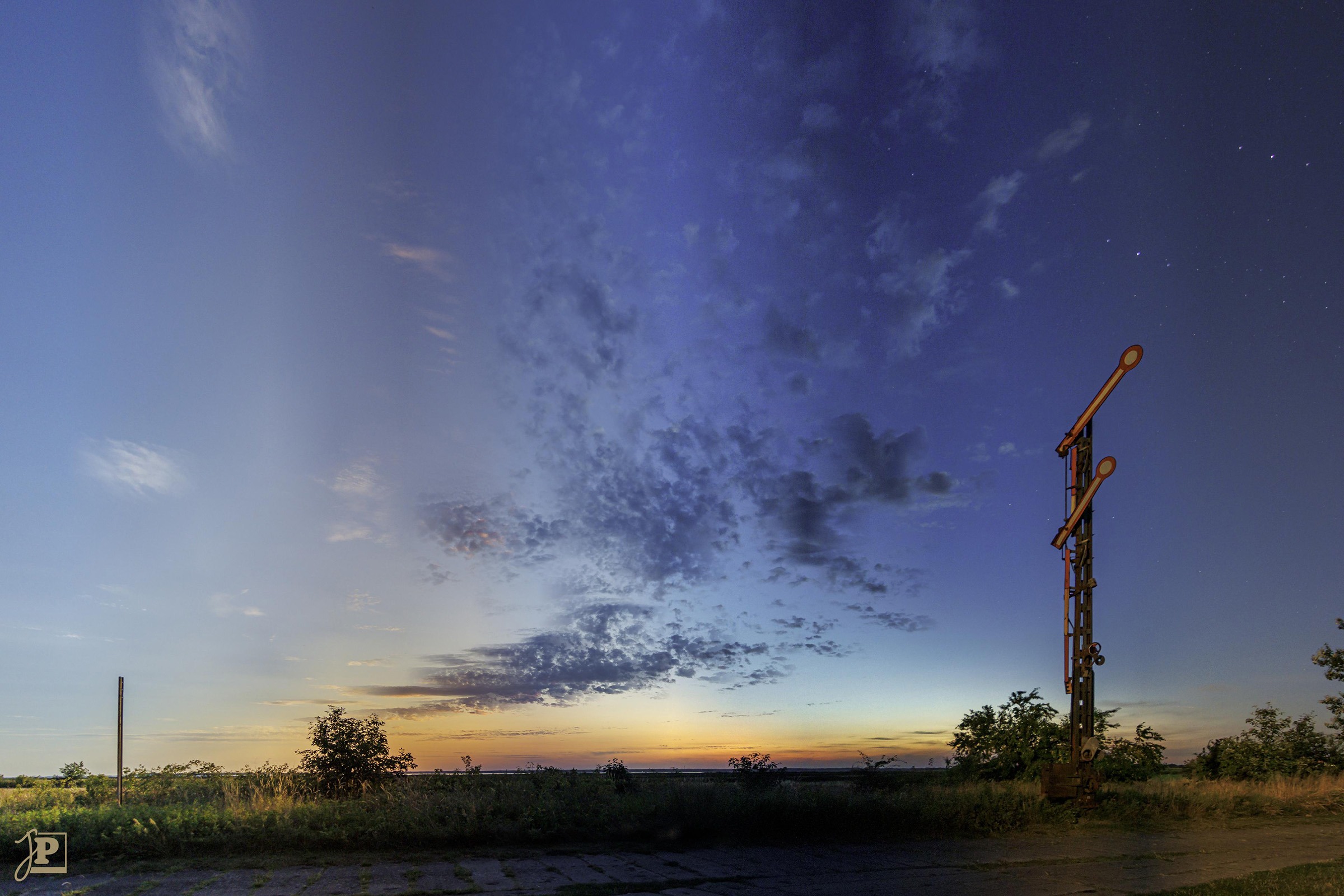
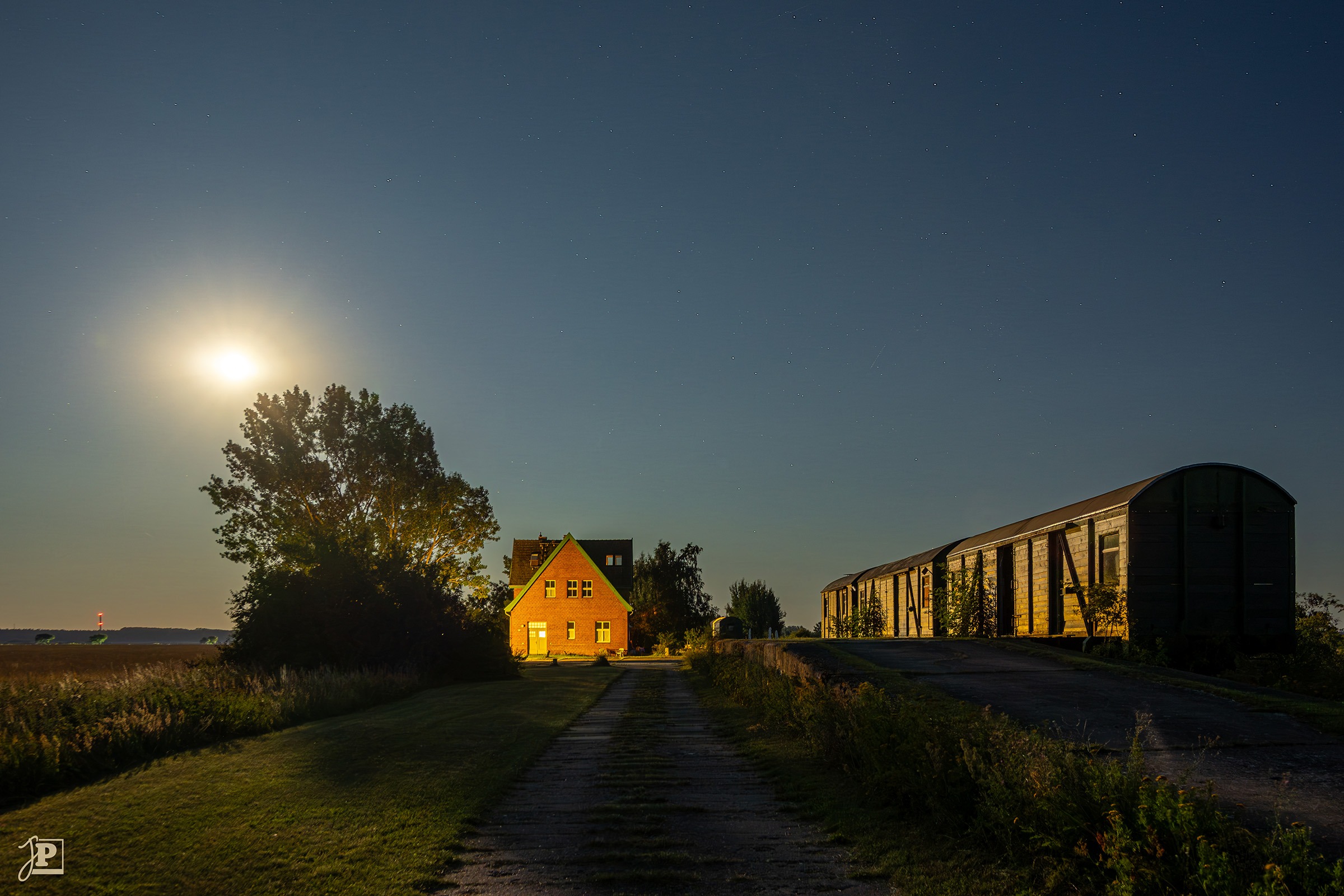
The video only gives a partial sense of just how bright the full moon was—the light from which illuminates the landscape and the signal at the end. So here’s another photo from the same evening, taken just after ending the timelapse recording, looking toward the train station:
And to wrap things up, here’s another photo of the moon setting from the first time-lapse—this one is sure to make it into the 2027 calendar:


You May Also Like
Horses in the Morning Haze
Blacksmithing: The Black Art